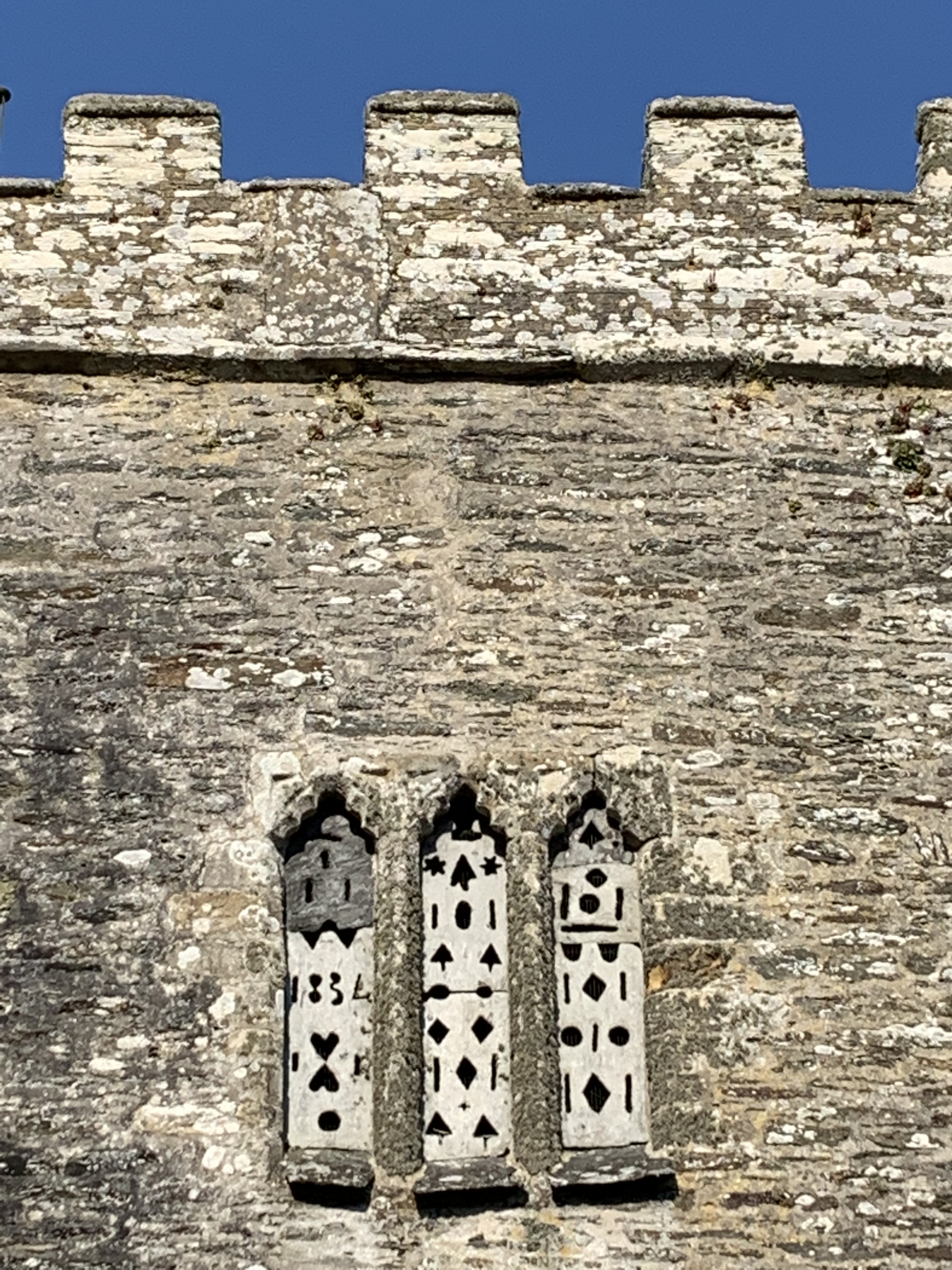
Ledger Stone 3
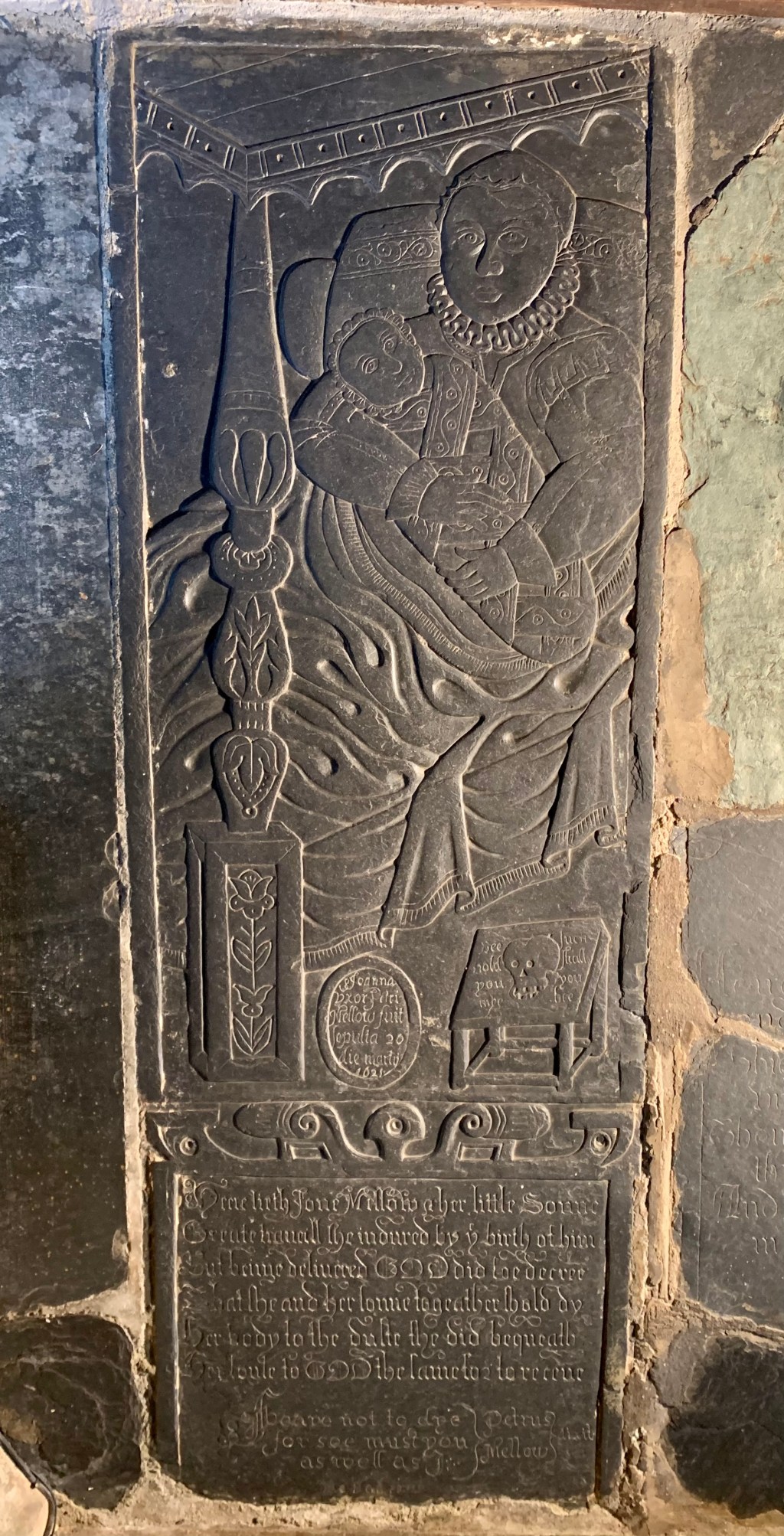
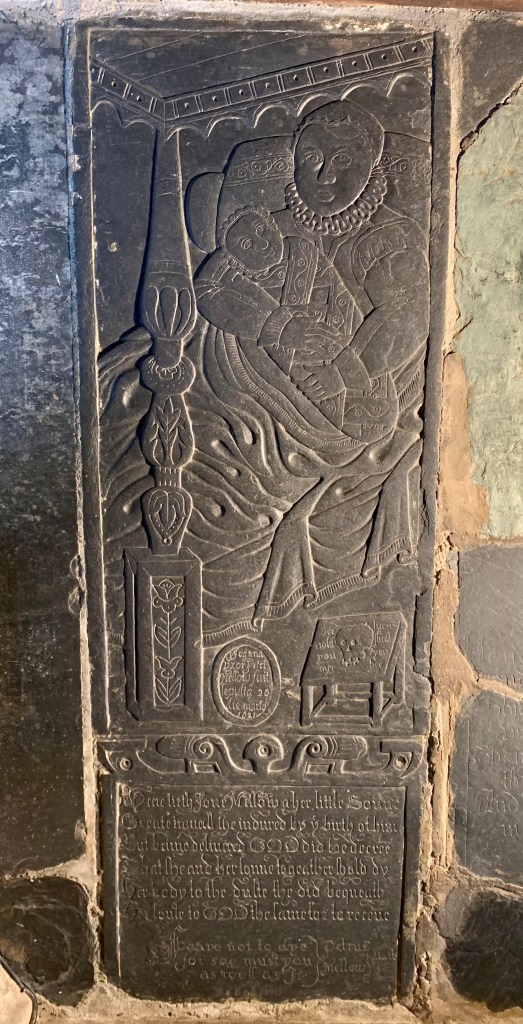
~ Slate ~ A bas-relief and incised figure of a woman, dressed in a skull cap and small ruff. Her garment has wide padded sleeves that hang from the embellished shoulders, the sleeves are narrow at the wrist and covered by large cuffs on her gloves. The neckline indicates she is wearing a jacket or Juppe, a loose form of doublet designed to be left open. She sits in a canopied bed showing the thickness of a palliasse mattress; part of the panelled canopy is visible with an ornamental edge and one full height carved post, decorated with flowers. She is resting against a bolster and embroidered pillow and covered by a large blanket or coverlet; she embraces her baby in her arms, who is wearing a skull cap and is tightly wrapped in decorative swaddling bands. The whole illustration is displayed with a false perspective; the viewer glimpsing the occupants from the bottom left-hand corner of the bed. Below them is a foot stool inscribed with a carved skull and motto. An oval medallion is inscribed with her name and date of death. Beneath the portrait is her epitaph, in incised Elizabethan script; the top of the panel decorated with a bas-relief scrolled manuscript frieze.
~ Orientation ~ West/East ~ displayed before the chancel step – 188 x 68cm // 6’2″x 2’2″
- Joanna Mellow – 20 March 1625
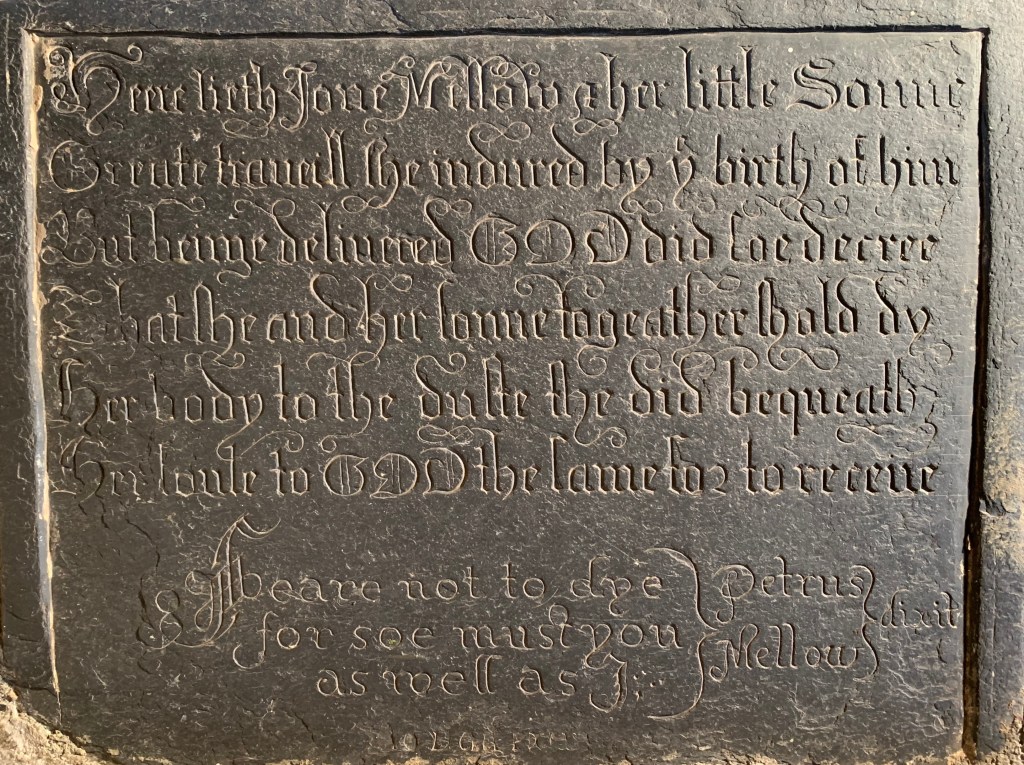
Heere lieth Jone Mellow & her little Sonne
Greate traveill ƒhe indured by ye birth of him
But beinge delivered GOD did ƒoe decree
That ƒhe and her ƒonne togeather ƒhold dy
Her body to the duƒte ƒhe did bequeath
Her ƒoule to GOD the ƒame for to receive
slate inscription
“Feare not to dye for soe must you as well as I”
} Petrus Mellow } dixit
The burial of Peetr Mellow at Talland Church is dated 6 February 1625 – “son of Peetr”
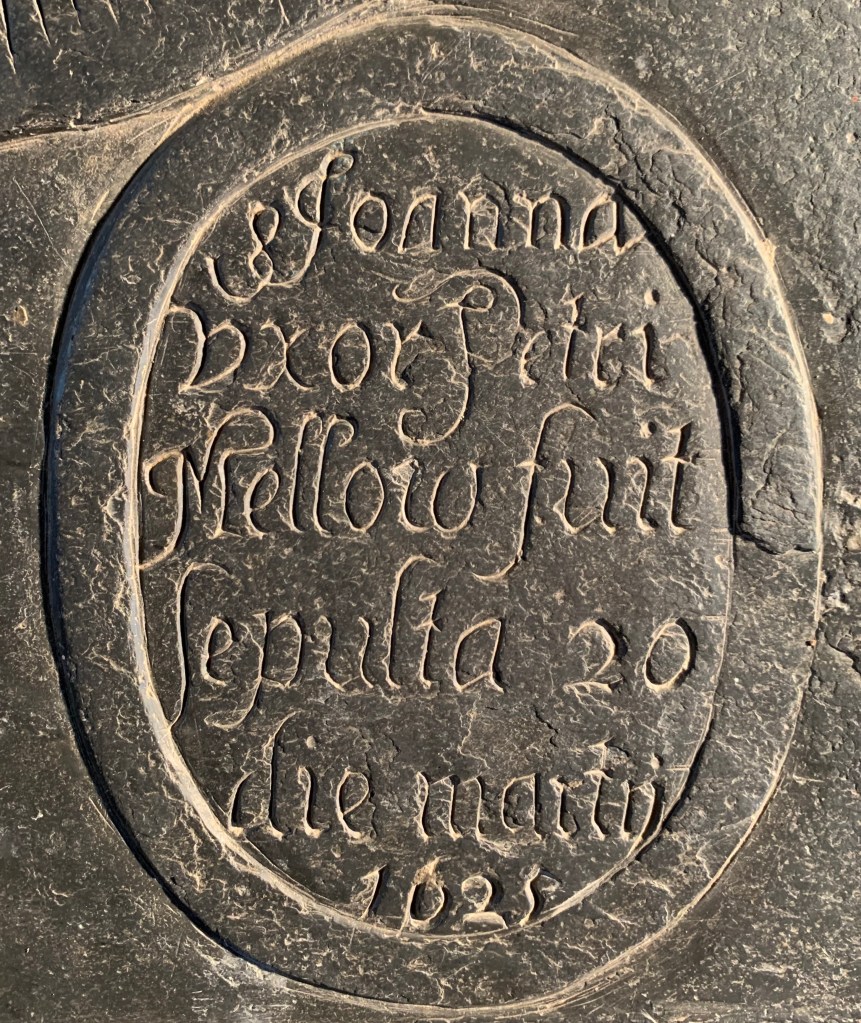
Joanna uxor Petri Mellow fuit sepulta 20 die marty 1625
Joanna wife of Peter Mellow was buried 20th day of March 1625
transcription & translation
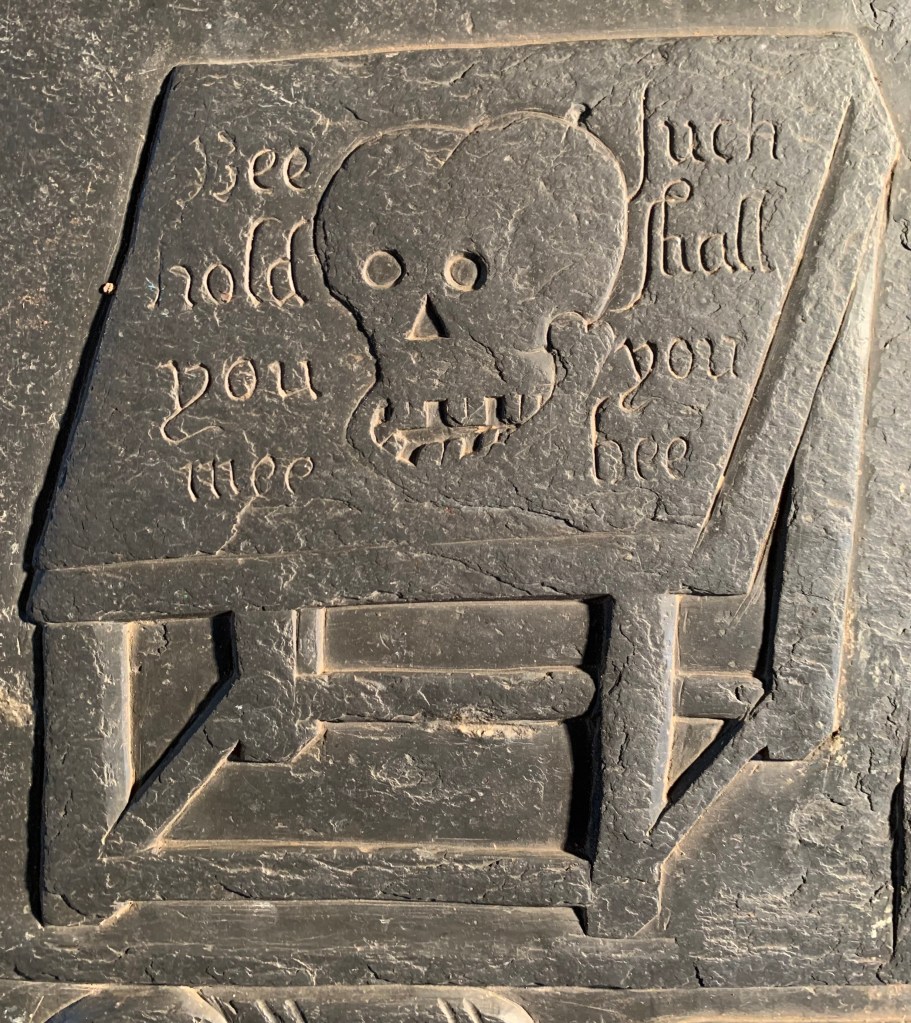
‘Bee hold you mee ~ Such shall you bee‘
Beds and bedding held immense value and were treasured to such an extent that they were passed down through generations. Wills often contained various descriptions, such as a “chest feather bed,” “bed and bedstead,” or simply the “best bed.” Even woollen mattresses were considered significant enough to pass on as heirlooms. The more affluent might inherit a featherbed and feather bolster, while the wealthiest would inherit several beds complete with fine embroidered hangings and exquisite bed linen.
The finest beds featured a canvas-covered under-mattress, supported by bed slats or woven rushes, and filled with wool (flock) or straw (paillasse). On top, a feather mattress and a feather-filled bolster, which extended across the bed’s full width, followed by sheets and a head sheet rather than a pillowcase. Pillows were considered luxurious or reserved for ill women, while generally, decorative pillow-covers were only displayed during the day.
On top of the sheets were woollen blankets and then a coverlet decorated the bed, reflecting the owner’s wealth. The most opulent coverlets could be lined with fur or silk, featuring a reversible design.
Fitted bodices and long full skirts were commonly worn by working women during the Elizabethan era; for fashionable women, the bodices were stiffened to lie flat across the bosom and the skirts, with decorative edging, would be divided at the front to reveal an underskirt. The shapes of the skirts would alter with the use of frames and padded rolls, causing the silhouette to change over time. There outfits were intricate, each separate piece, the bodice, sleeves and ruff, the undershirt and skirt were all secured with pins. These components could be rearranged to create various looks. Valuable garments, such as a pair of embroidered sleeves or a ruff accompanied by matching cuffs were very generous presents.
 Talland Church Headstones
Leave a comment